
.jpg)
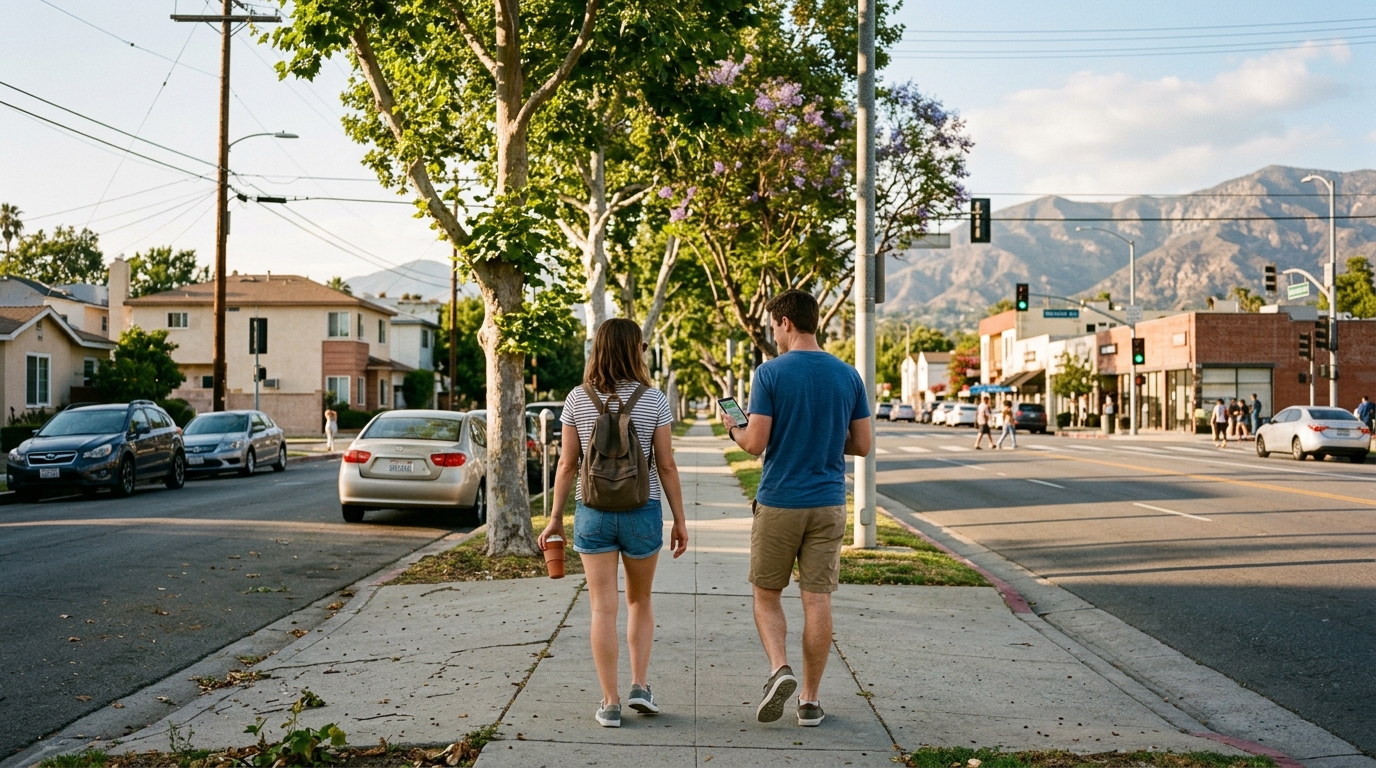
Walkability means different things depending on your routine. If you are asking how walkable Granada Hills is, consider your specific location, weekly errands, and whether you expect to walk for daily needs or mostly for recreation.
The area generally has a more car-oriented layout than denser parts of Los Angeles, but pedestrian access can vary by location. People researching rental living in Granada Hills should look beyond a neighborhood-wide score and check the routes they would actually use each week.
Quick Answer: Is Granada Hills Walkable?
The neighborhood is generally car-dependent rather than highly walkable. Its current Walk Score of 44 and Transit Score of 29 suggest many everyday errands are easier by vehicle, though some public transportation is available.
That does not mean every home offers the same experience. Some residents may walk to restaurants, shops, parks, or bus stops, while larger grocery trips, regional shopping, and commuting may still be easier by vehicle.
Quick Walkability Checklist for Renters
Before choosing an address, check:
- Distance to groceries, coffee, parks, and transit
- Sidewalks and crossings on the route you would actually take
- Whether you will carry groceries or walk with pets
- Summer heat and evening visibility
- Bus access for your real commute
- Whether larger errands still require a vehicle
Understand Granada Hills’ Overall Walkability
Walk Score currently classifies the neighborhood as Car-Dependent. The area-wide rating is a useful starting point, but it does not describe every property or street.
Pedestrian access can change based on:
- Distance to shops and services
- Sidewalk availability
- Number of major street crossings
- Traffic and road width
- Hills or changes in elevation
- Shade and weather exposure
- Distance to a transit stop
A home near a commercial corridor may offer a very different daily experience from one farther inside a residential or hillside area.
A store can look close on a map but still require crossing a wide road, following an indirect path, or carrying groceries along an uncomfortable route.
Prospective renters considering Solaterra can explore the neighborhood map and compare its San Fernando Mission Boulevard location with the destinations that matter most to them.
What Everyday Trips May Be Practical on Foot?
The most useful approach is to start with the errands you complete regularly.
From some locations, shorter trips on foot may include:
- Coffee or a casual meal
- Small retail purchases
- Pharmacy or personal-care errands
- Nearby services
- Local parks
- Bus stops
Larger errands may be harder on foot, especially when purchases are heavy or destinations are spread across the area.
Chatsworth Street, Balboa Boulevard, and San Fernando Mission Boulevard are important local corridors, but shops and pedestrian access vary along them. Just because a shop is on one of these streets does not mean it will be an easy walk from every home.
Before signing a lease, check the route yourself if possible. Look at sidewalks, crossings, traffic, distance, and how the trip feels at the time of day you would normally make it.
Recreational Walking Is Different From Running Errands
The area offers places to walk for exercise and outdoor recreation, even though driving is still common for everyday transportation.
Local recreation options include O’Melveny Park, Bee Canyon Park, Granada Hills Recreation Center, and residential walking routes.
O’Melveny Park is a large local park with hiking and walking opportunities. It can be a good recreation destination, but many residents may still need transportation to reach it.
The same distinction applies to other parks and trails. You may drive to a recreation area and then spend an hour walking once you arrive.
Recreational walking and everyday pedestrian access are not the same. An area can offer enjoyable outdoor routes while driving remains useful for groceries, work, medical appointments, or larger errands.
For more local recreation ideas, explore things to do in Granada Hills.
Can You Live in Granada Hills Without a Car?
It may be possible for some households, but the area is not generally designed around a fully car-free lifestyle.
Metro bus service operates through portions of the neighborhood. Current route materials show Line 235/236 serving the area along a route connecting Sylmar, Mission Hills, Northridge, Lake Balboa, and Encino. Line 237 also provides connections toward North Hollywood, Van Nuys, Northridge, and Encino.
A lower-car routine may be more workable when:
- Your job or school is reachable with a practical bus connection
- Essential errands are relatively close to home
- You work remotely or follow a hybrid schedule
- Delivery fills occasional grocery or household needs
- You do not regularly travel across multiple parts of Los Angeles
Living without a vehicle may be harder when your commute requires several transfers or regular destinations are spread across the San Fernando Valley.
Renters weighing the broader lifestyle can also review what living in Granada Hills is like.
Use a Five-Minute Walkability Test Before Choosing an Address
A neighborhood score is useful, but your own weekly destinations are more important.
1. Map Your Five Most Frequent Destinations
Start with places you expect to visit regularly, such as a grocery store, pharmacy, workplace or transit connection, coffee shop, and park.
2. Check the Actual Pedestrian Route
Do not look only at straight-line distance. Review sidewalks, major intersections, road width, hills, and how many crossings are involved.
3. Separate Daily and Occasional Trips
You may not need every destination to be walkable. Focus first on the places you expect to visit several times per week.
4. Think About Real Conditions
Consider summer heat, evening trips, carrying groceries, walking with a pet, or any personal mobility needs that affect whether a route is practical.
5. Choose Your Transportation Mix
Your routine might combine walking for nearby errands, transit for selected trips, driving for larger shopping or commuting, and dedicated recreational walks at local parks.
Rather than chasing the highest score, focus on whether the location supports how you actually live.
When a Vehicle May Make Daily Life More Practical
For many households, access to a vehicle makes regional travel and larger errands easier.
Driving may be particularly useful for:
- Larger grocery trips
- Multiple errands in one outing
- Cross-Valley work commutes
- Medical appointments farther from home
- Weekend trips
- Parks or recreation areas that are not nearby
Home features can also support a driving-based routine. Solaterra currently lists private attached garages, Parcel Pending lockers, and in-home washers and dryers, plus a pool, hot tub, and clubhouse. Features vary by residence.
Renters comparing which conveniences matter most can review amenities that support everyday routines.
These features do not improve pedestrian access, but they may reduce certain trips outside the community.
Explore Granada Hills From Solaterra
Compare the location with your own commute, errands, parks, and preferred transportation options. If you are considering Solaterra, review the property’s location and the routes you expect to use, then contact the Solaterra Granada Hills leasing team to ask about the community.
Frequently Asked Questions About Granada Hills Walkability
Is Granada Hills Walkable?
The neighborhood currently has a Walk Score of 44 and is categorized as Car-Dependent. Some locations may offer easier access to shops, parks, restaurants, or transit than the area-wide score suggests.
Do You Need a Car in Granada Hills?
Many people may find a vehicle useful for commuting, grocery shopping, and regional trips. Whether you need one depends on your location, workplace, transit access, delivery habits, and regular destinations.
Can You Live in Granada Hills Without a Car?
Some households may be able to, particularly if they work remotely, live near essential services, and have useful transit connections. Living without a vehicle may be less practical when regular destinations are spread throughout the San Fernando Valley or greater Los Angeles.
Is There Public Transportation in Granada Hills?
Yes. Metro bus routes serve portions of Granada Hills and connect the neighborhood with other areas of the San Fernando Valley. Routes, schedules, stop locations, and transfer requirements can change, so check current Metro information for the trips you plan to make.
Where Can You Walk for Recreation in Granada Hills?
The area offers recreation options including O’Melveny Park, Bee Canyon Park, Granada Hills Recreation Center, and neighborhood walking routes. Some recreation areas may still require transportation depending on where you start.
Disclaimer
Walkability varies by location, route, destination, and personal mobility needs. Transit service, businesses, road conditions, and schedules may change, and an area-wide score does not guarantee that a destination is easy to reach on foot. External references include Walk Score – Granada Hills, LA Metro Line 235/236, LA Metro Line 237, O’Melveny Park, Bee Canyon Park, and Granada Hills Recreation Center. Verify important routes and transportation details before making a leasing decision.